Form studies
Full-scale volumes for judging presence, footprint and the balance of an object.
We build functional prototypes that show how a part looks, fits and works before you invest in production. Each iteration is built to answer a useful question.
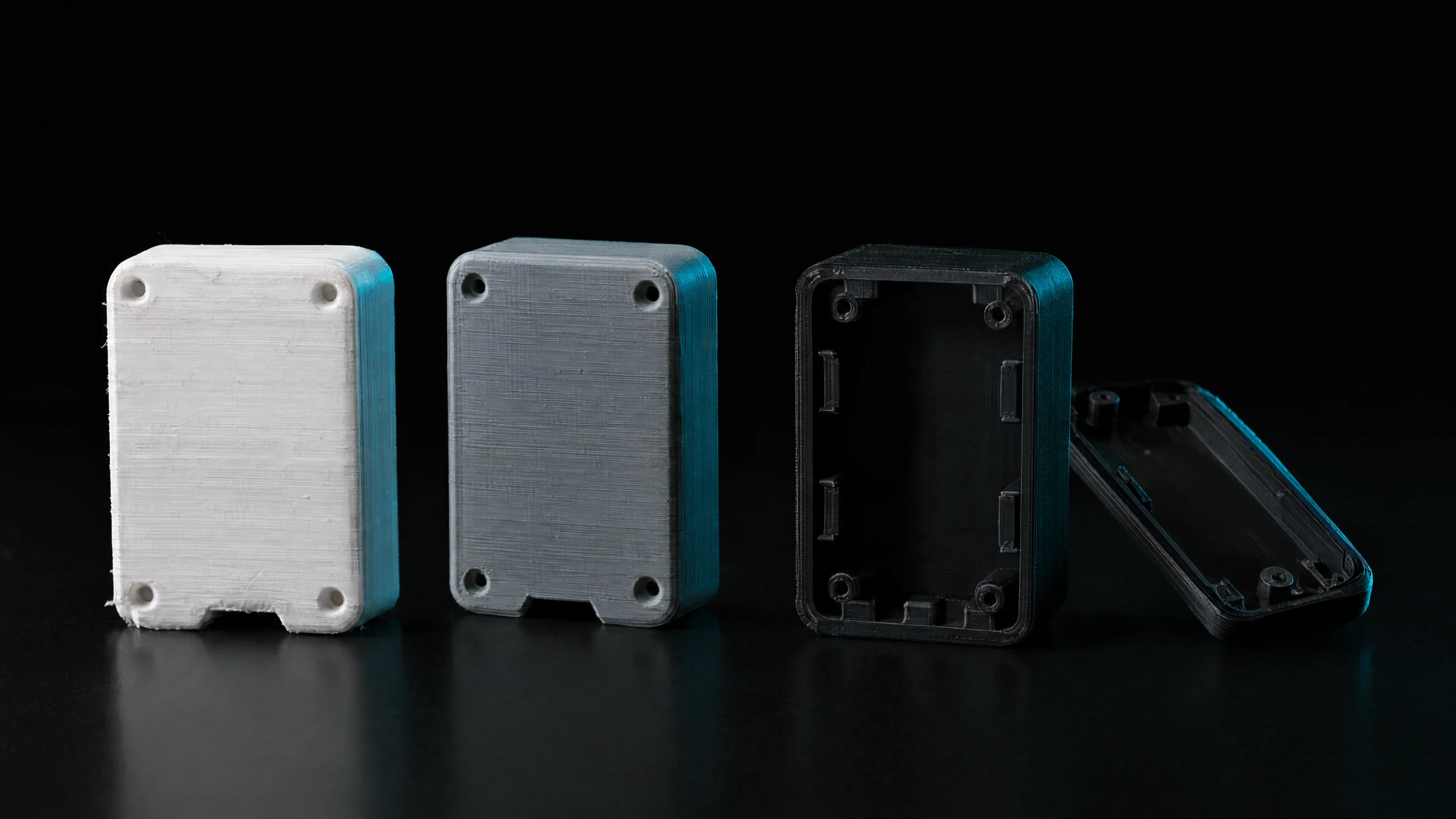
The value is not simply holding an object. It is knowing what to learn from it. We frame each prototype around practical questions: Does the grip feel right? Do the parts fit? Are the proportions convincing? Will the component support its intended use? What we learn feeds directly into the next design decision.
Every prototype is assembled and set in motion: fits, clearances and couplings are checked on the real part.
Full-scale volumes for judging presence, footprint and the balance of an object.
Grips, touch points and interactions evaluated with a physical model rather than a render.
Mating parts, tolerances and assemblies tested before production becomes expensive.
Purposeful changes between versions, each guided by a clear validation goal.
We define the decisions the prototype must unlock and what it does not need to simulate.
We adapt or develop the 3D model into a useful, readable and buildable test piece.
We select the material, orientation and build parameters that best support the evaluation.
We interpret the results, update the design and decide whether another iteration is worthwhile.
Functional prototyping is building a part that can be assembled, loaded and used, not only looked at. It answers practical questions before tooling: does it fit the mating parts, does the clip hold, does the hinge move, does the wall survive real handling. We choose the material and orientation for the test the part has to pass, and we tell you what the prototype can and cannot prove compared with the production part.
A form model shows size, proportions and ergonomics. A functional prototype is built to be assembled and tested in use, so material, wall thickness and orientation matter more.
Often, yes. When the 3D printed part already meets the requirements, we can produce a small batch in the same material; otherwise we tell you which process fits better.
The right level of fidelity depends on the decision at hand. Sometimes an intentionally simple model is enough; other projects need moving parts, finishing or several iterations. A focused brief prevents effort being spent on details that do not improve the test.
Request a quote