
3D printing materials: which one is right for your part.
The material decides whether a part can take heat, impact, sunlight or repeated assembly. Choosing it well from the start saves you a second print. Here are the practical differences between the materials we use most. In the quote we always tell you which one fits your case, and why.
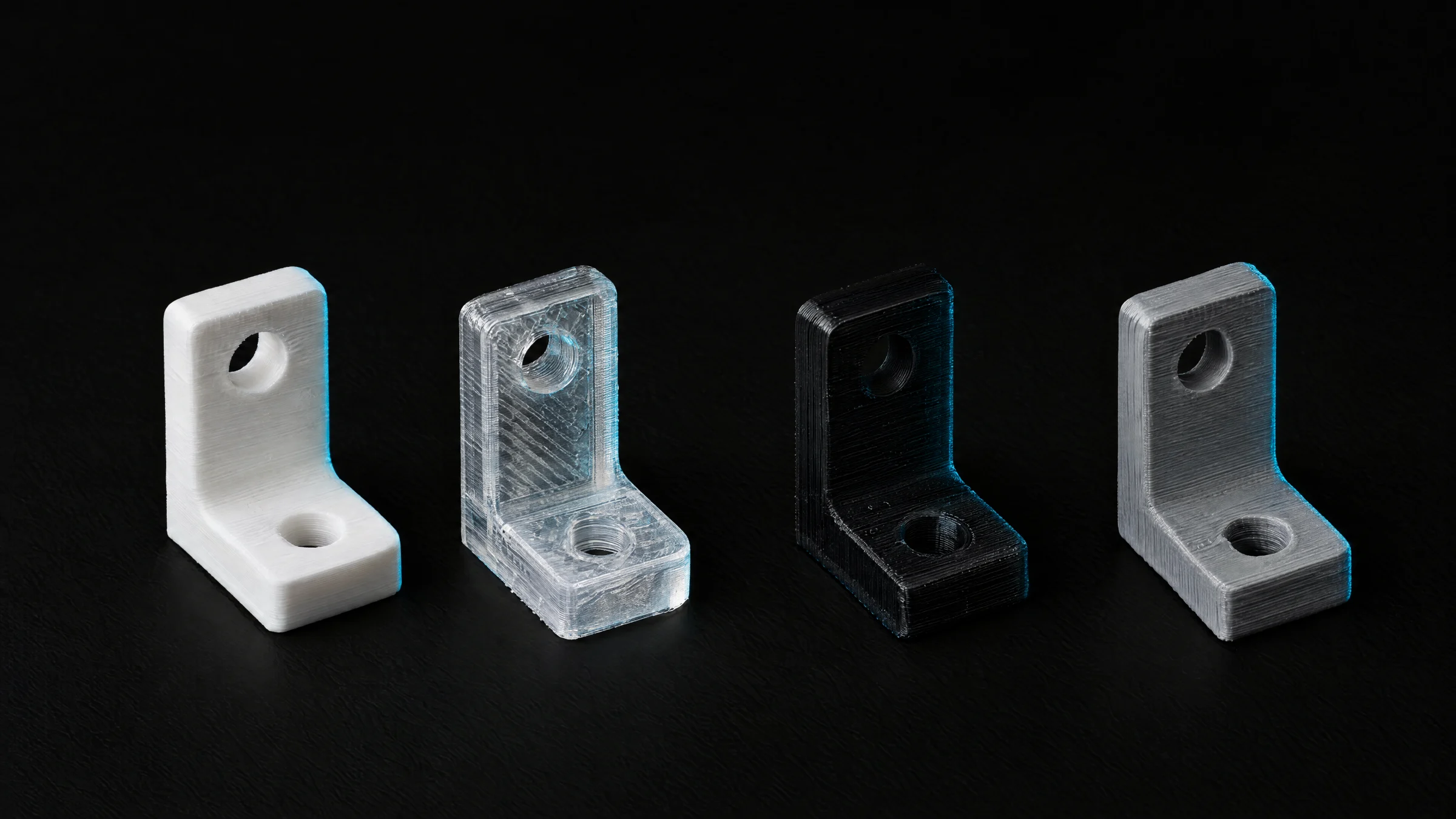
At a glance
| Material | Best for | Heat | Outdoor | Behaviour |
|---|---|---|---|---|
| PLA | form models, presentations, fit checks | low | no | stiff, brittle on impact |
| PETG | functional parts, brackets, enclosures | medium | limited | tough, less brittle than PLA |
| ABS | technical housings, mechanical parts | good | limited | strong, easy to post-process |
| ASA | parts exposed to sun and rain | good | yes | like ABS, UV resistant |
PLA: to see and hold the shape
PLA gives clean surfaces and sharp detail. It is the right choice for form prototypes, presentation models and fit checks. It starts to soften at around 55-60 °C, so it is not suitable near heat sources or inside a car in the sun.
PETG: the balance for functional parts
PETG is tougher than PLA and handles moisture and many chemicals better. We use it for brackets, holders, enclosures and prototypes that are assembled and taken apart several times.
ABS: strength and workability
ABS withstands higher temperatures and can be drilled, glued and finished after printing. It suits housings and mechanical components. It tends to warp while printing, so we prepare the file with particular care.
ASA: for parts that live outdoors
ASA behaves much like ABS but resists UV light and weather without yellowing or turning brittle. We choose it for covers, components of outdoor machinery and vehicle accessories.
Other technical materials
For specific needs we assess other materials case by case. Availability and settings are confirmed in the quote.
How we choose together
You do not need to know materials to ask for a quote. Four answers are enough:
- where the part will be used (indoors, outdoors, near heat);
- whether it must carry loads, take impacts or move;
- whether it is a prototype to evaluate or a part for real use;
- how many copies you need.
Frequently asked questions
Which material is the strongest?
It depends on the stress. For impact and bending PETG often beats PLA; for heat and outdoor use you need ABS or ASA. We tell you in the quote.
Can I have the same part in two materials to compare them?
Yes. During prototyping it is often the quickest way to decide.
Are FDM parts suitable for real use?
For one-off parts, spare parts, jigs and small batches, yes. For high volumes we help you design the part for its final production process.
What is the difference between PLA and PETG?
PLA is stiffer and gives cleaner surfaces, but it is brittle on impact and sensitive to heat. PETG is tougher and handles moisture better. For a form check we choose PLA, for a working part PETG.
Tell us about the part you need.
Attach the file if you have one, or describe the part with photos and measurements. We reply within 24 working hours with a quote or the technical questions we need answered.
Request a quote