
Pleat Halo, a 3D printed table lamp.
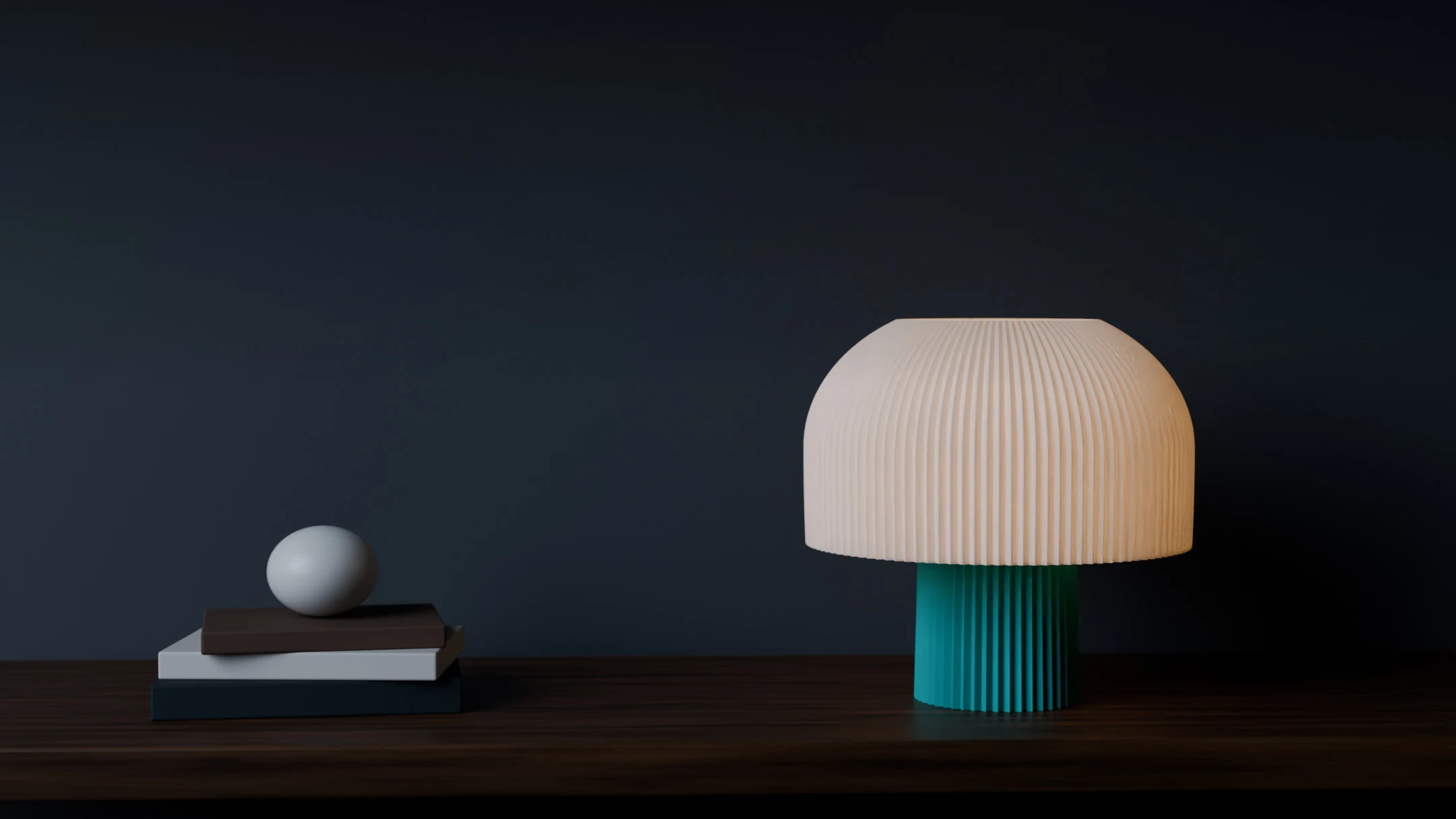
Pleat Halo is a table lamp we design and 3D print in our studio in Treviso, Italy: a white dome of 108 pleats on a fluted turquoise body. Just two parts in matt PLA, no screws and no glue. The form is parametric: it is described by dimensions and rules, so every proportion is checked before printing.
1. Before the dimensions, the line
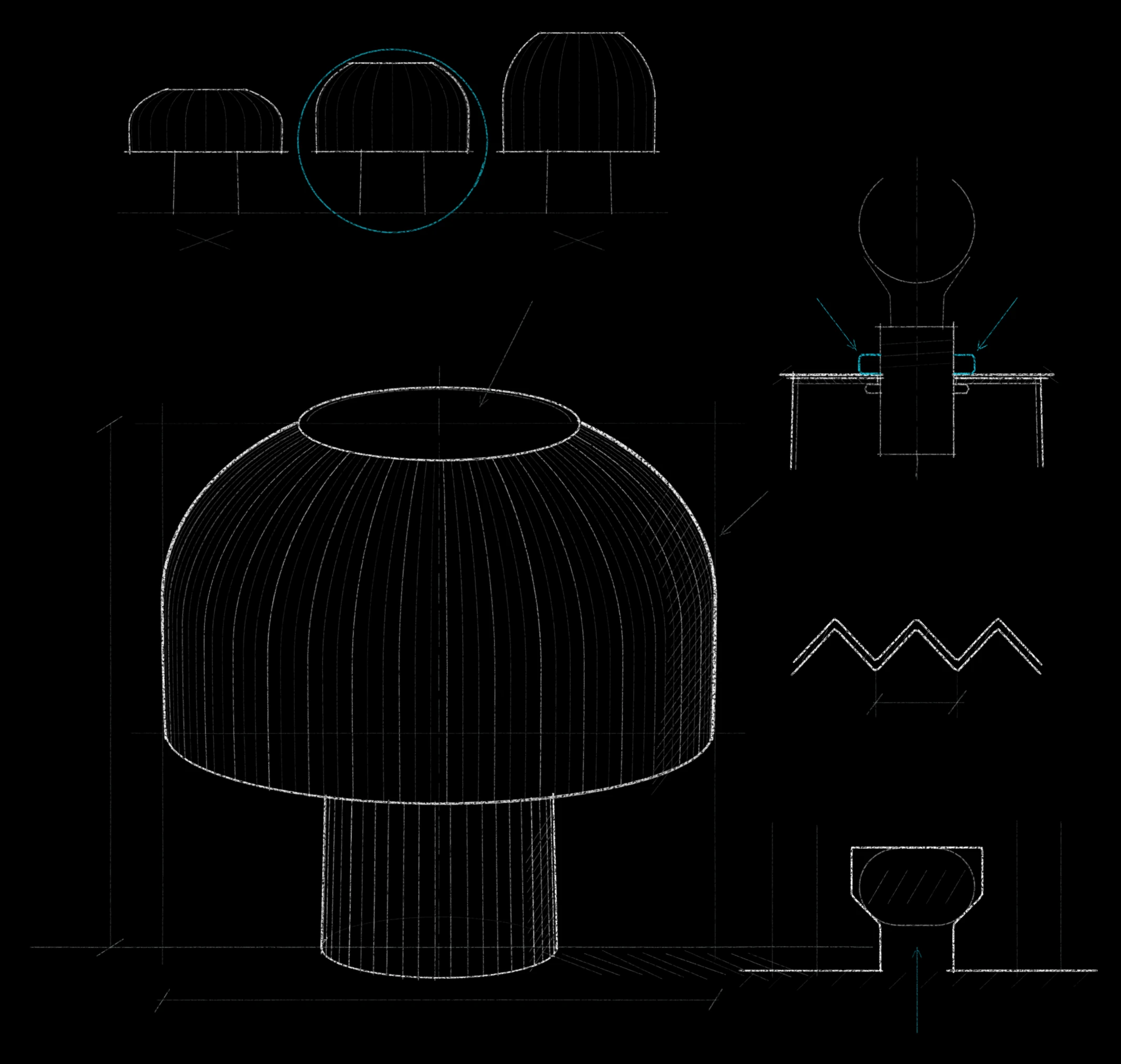
The project starts from a drawing, corrected until the proportions hold. For Pleat Halo we studied four points: the proportion of the dome, the pitch of the pleats, the way the two parts close together and the cable exit. Only then did each choice become a dimension in the 3D model. It is the method we follow in every product design project, set out step by step in the guide from idea to product.
2. The wall and the light
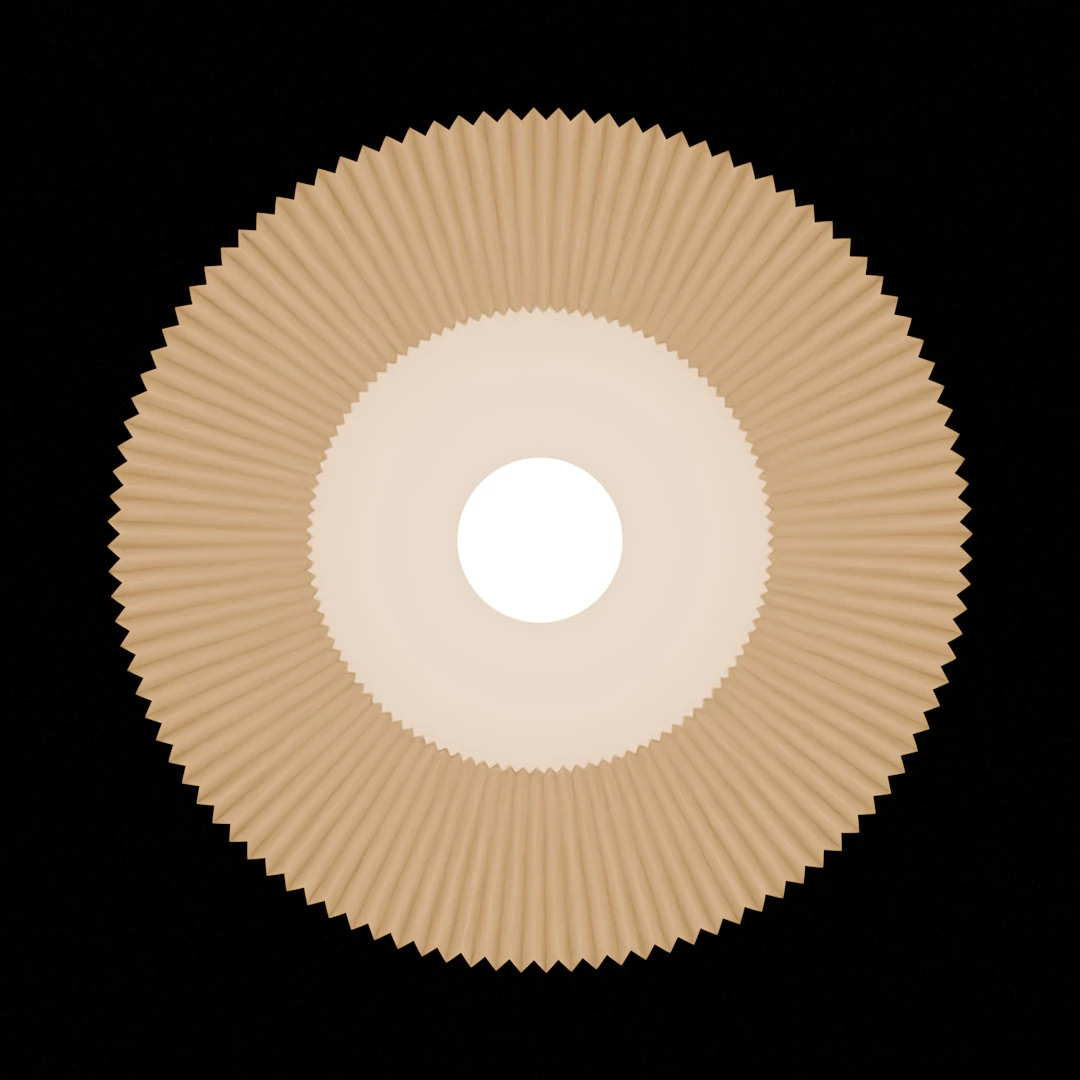
The dome wall is 0.82 mm thick: exactly two nozzle passes, side by side, with no infill between them. The thickness stays the same from the bottom up to the opening, so the light always crosses the same amount of material and the dome glows evenly. A flat bottom closes the dome and hides the bulb; the 158 mm top opening sends light upwards and lets the heat out.
3. Two diameters, one pitch
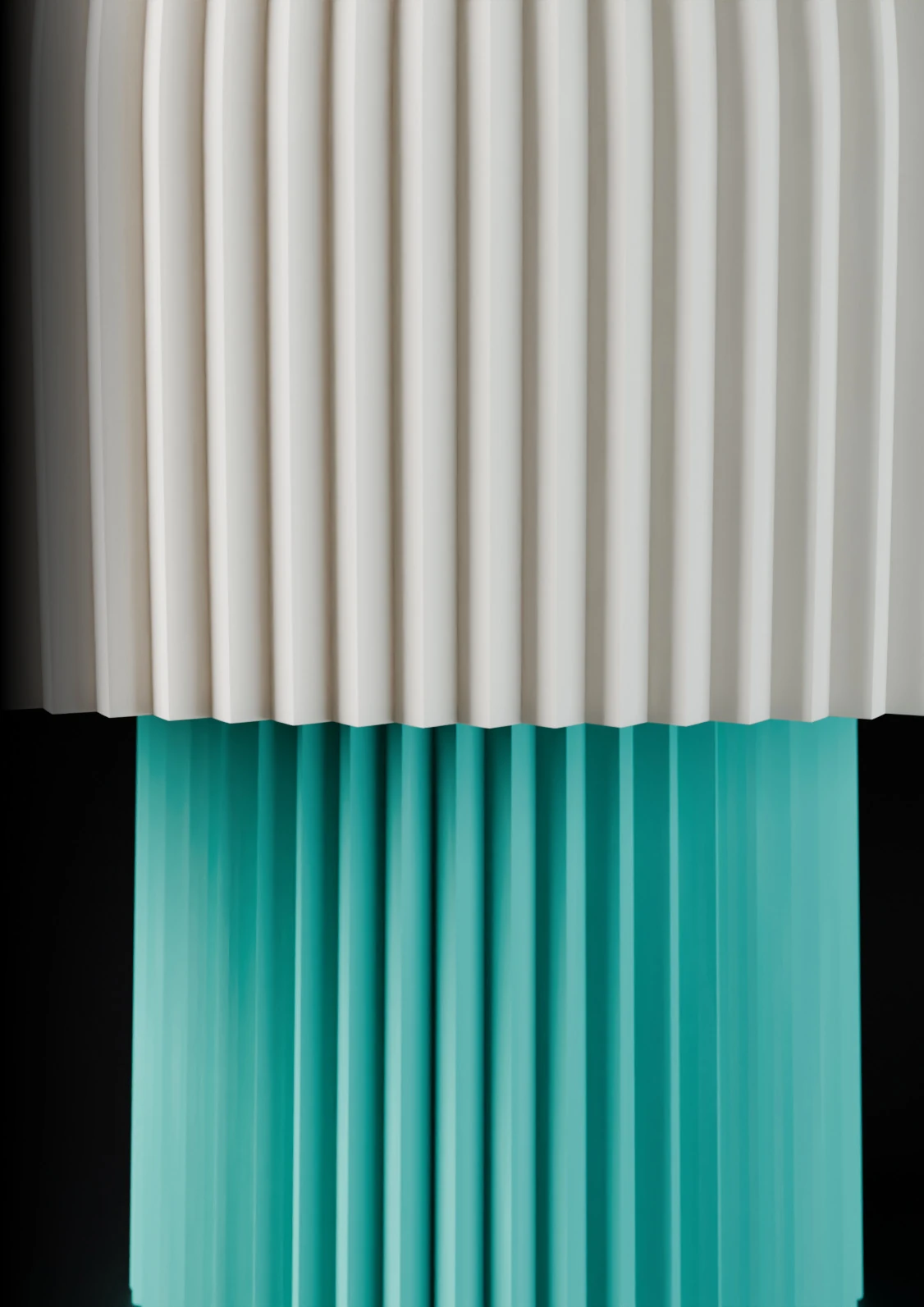
The dome has 108 pleats and the body has 45 flutes: the numbers differ because the diameters differ, but at the widest point of the dome and at the base of the body the pitch is the same, about 9 mm, and the pleats narrow as they rise towards the opening. That is why dome and body read as a single object. The pleats are not decoration: they stiffen a thin wall and draw the light. These are the design for manufacturing rules applied to a piece of furniture.
4. Two parts, no screws
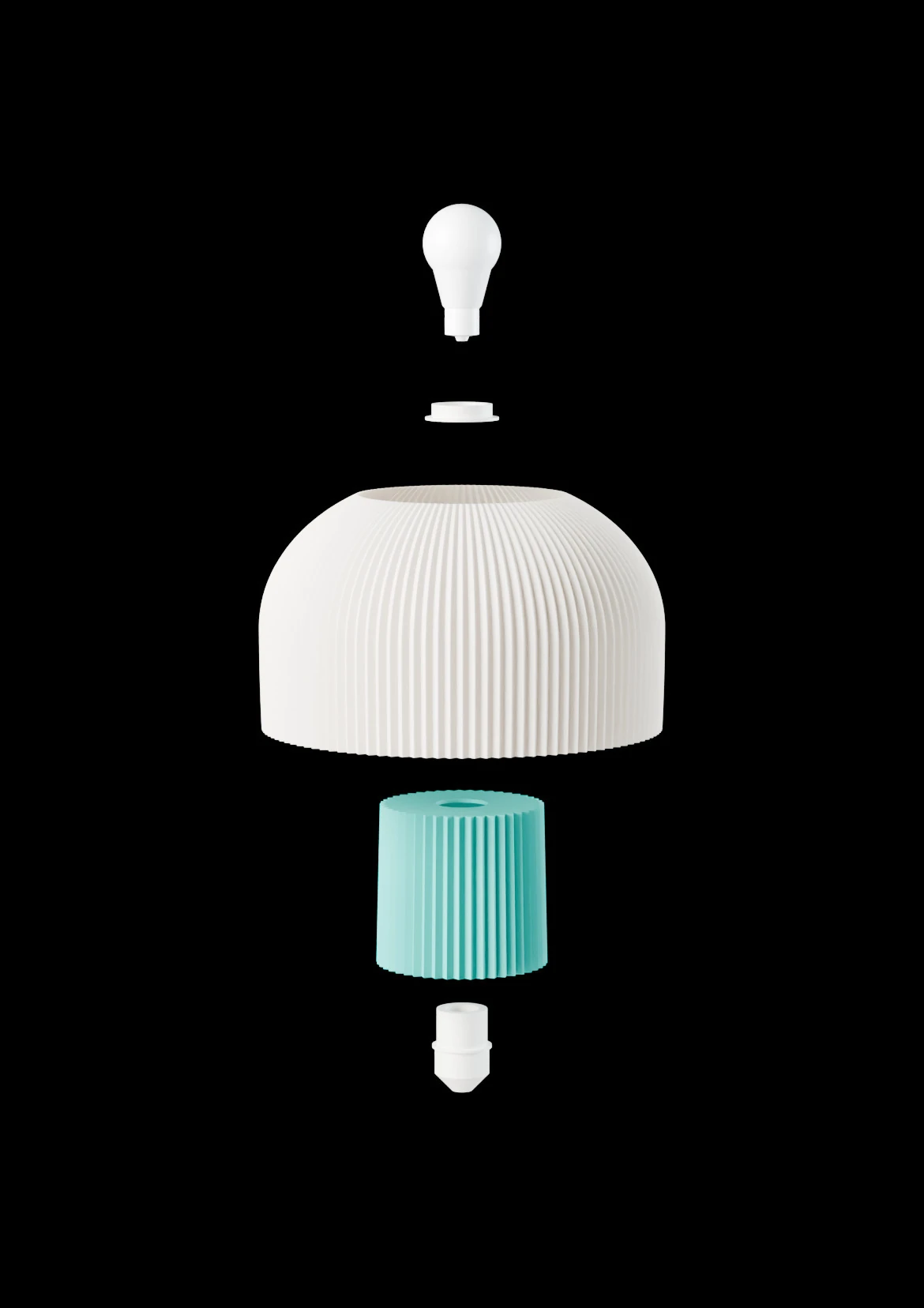
The dome rests on the body. The lampholder goes in from below and its threaded ring, screwed on from above inside the dome, clamps the two parts together. It is assembled and taken apart by hand, and the bulb is changed through the top opening without dismantling anything. The 316 mm dome is printed in a single piece with no supports.
5. Designed where nobody looks
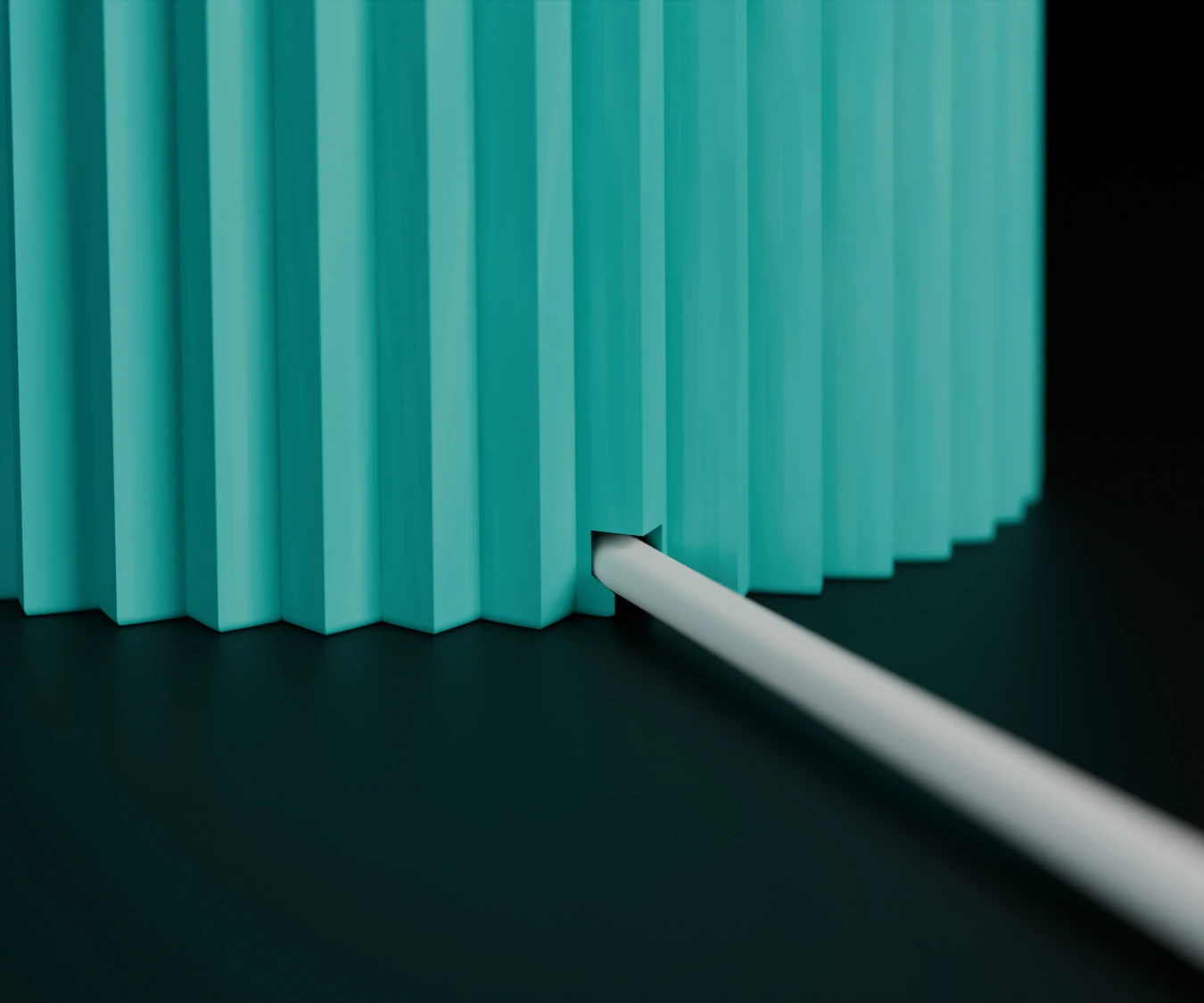
The 4 × 6 mm flat cable slides edge-on through the 3.8 mm mouth, then turns flat in the T-shaped seat at the base of the body, at the back. Lying flat it is wider than the mouth, so it does not slip out, even when you lift the lamp, and the base sits flat on the table.
Technical sheet
| Specification | Pleat Halo |
|---|---|
| Dimensions | Ø 316 × H 310 mm |
| Dome | Ø 316 × H 183 mm, 108 pleats |
| Body | Ø 135 × H 127 mm, 45 flutes |
| Dome wall | 0.82 mm |
| Material | Matt PLA, white and turquoise |
| Technology | FDM 3D printing, 0.2 mm layers, no supports |
| Cable | Flat 4 × 6 mm, exits at the back |
| Bulb | LED only, A60 shape, E27 fitting |
| Weight of printed parts | About 0.5 kg |
We chose PLA because an LED bulb gives off little heat and the matt finish keeps the pleats legible. For a hotter light source or for outdoor use we would choose a different material. We print every lamp in our studio, in Treviso.
Another studio project: the Meridian Facet Planter, from concept to printed part.
Have a product to develop, from the form to the printed part?
We reply within 24 working hours.
Request a quote